
The Science of Radiance: Why Copper Peptide (GHK-Cu) is the Gold Standard of Modern Skincare
What is Copper Peptide (GHK-Cu)?
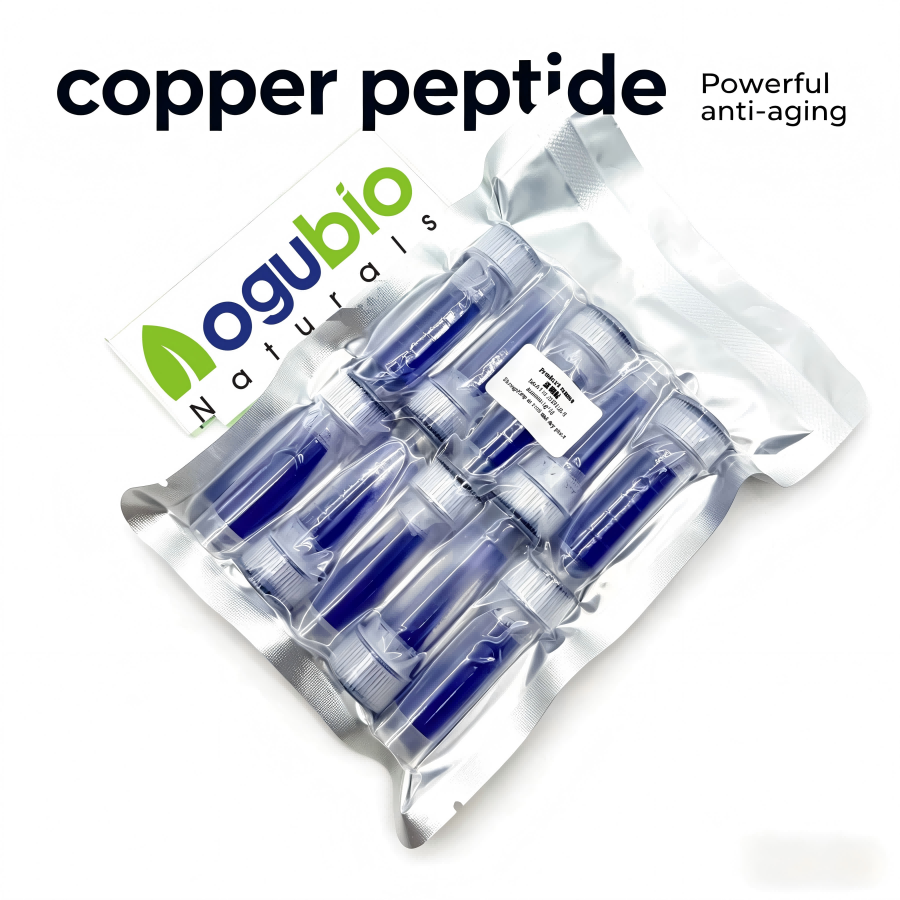
Copper Peptideis a naturally occurring complex in which a glycyl-L-histidyl-L-lysine (GHK) tripeptide binds with a copper (II) ion. First isolated from human plasma in 1973 by Dr. Loren Pickart, GHK-Cu is a signaling peptide that plays a vital role in maNAGing inflammation and promoting wound healing.
As we age, the concentration of GHK-Cu in our body drops significantly. At age 20, the plasma level is approximately 200 ng/mL; by age 60, it declines to about 80 ng/mL. This decline is directly linked to the skin’s reduced ability to repair itself and maintain elasticity.
The Biological Mechanism: How It Works
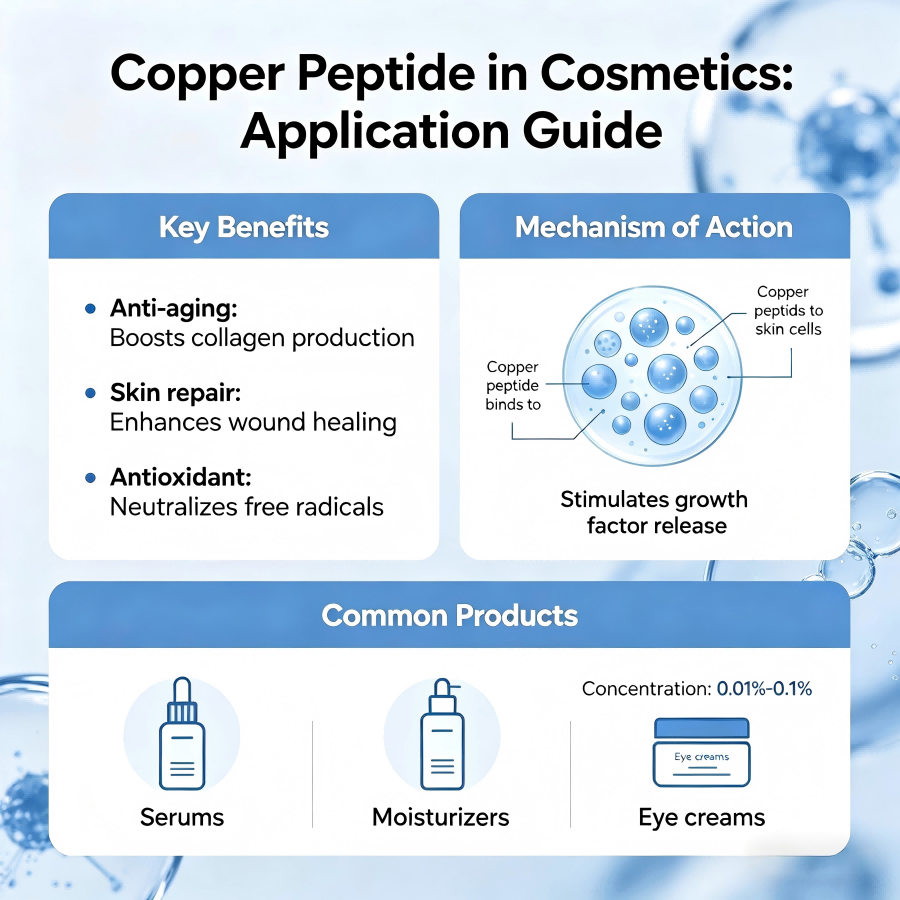
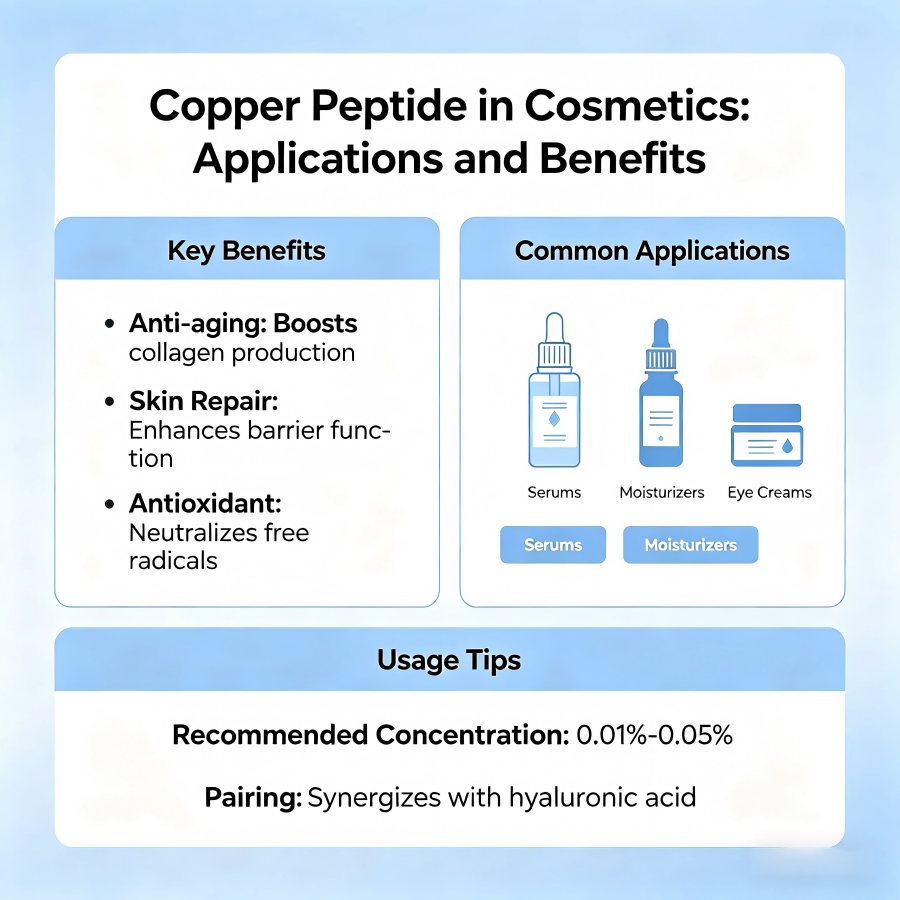
Copper peptides function as "Remodeling Signals." Unlike some active ingredients that merely hydrate the surface, GHK-Cu penetrates the stratum corneum to communicate with skin cells. Its primary functions include:
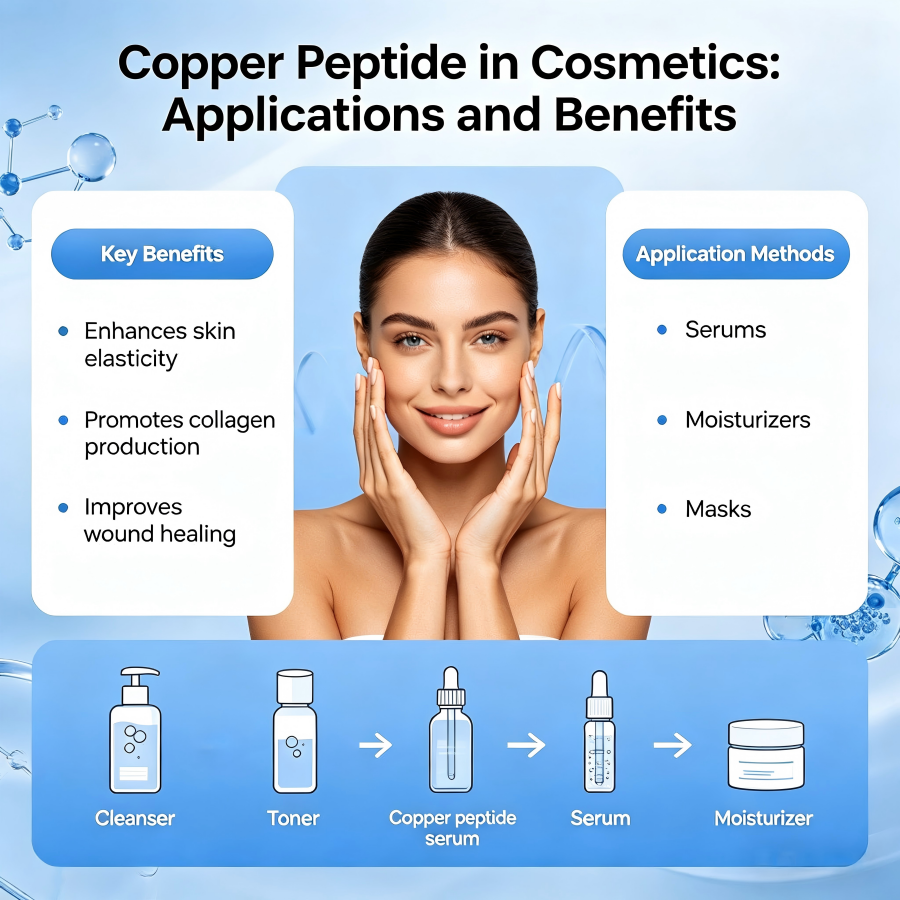
- Collagen and Elastin Stimulation: It triggers the synthesis of glycosaminoglycans (like hyaluronic acid) and structural proteins.
- Antioxidant Support: It boosts the activity of superoxide dismutase (SOD), a powerful enzyme that neutralizes free radicals.
- Anti-inflammatory Action: It modulates cytokine levels, reducing the "inflamm-aging" process that leads to rapid skin degradation.
FAQ: Addressing Common Questions about Copper Peptides
- Is Copper Peptide better than Retinol?
While Retinol focuses on cell turnover, Copper Peptide focuses on structural repair. Many dermatologists consider them complementary. Copper peptide is often preferred for sensitive skin because it provides firming benefits without the irritation or "purging" typical of Vitamin A derivatives.
- Can I use Copper Peptide with Vitamin C?
This is a common debate. Pure Vitamin C (L-Ascorbic Acid) has a low pH, which may cause the copper ion to detach from the peptide, potentially rendering both ingredients less effective or causing oxidation. It is generally recommended to use Vitamin C in the morning and Copper Peptides in the evening.
- Does it help with hair growth?
Yes. Clinical studies suggest that copper peptides can enlarge hair follicles and stimulate the scalp's blood flow, making it a popular ingredient in high-end hair density serums.
Clinical Evidence and Research Highlights
The professional authority of Copper Peptide comes from rigorous peer-reviewed studies.
- Firming and Elasticity: A study published in theJournal of Cosmetic and Laser Therapydemonstrated that GHK-Cu increased collagen in 70% of women tested, outperforming both Vitamin C and Retinoic Acid in its ability to stimulate collagen synthesis in the dermis.
- Wound Healing: Research by Pickart L. et al. highlights that GHK-Cu accelerates the healing of various wounds, including surgical incisions and diabetic ulcers, by promoting the formation of new blood vessels (angiogenesis).
- DNA Repair: Emerging research suggests that GHK-Cu can upregulate DNA repair genes, potentially reversing some of the cellular damage caused by UV radiation.
Research Note
According to theInternational Journal of Molecular Sciences(2018), GHK-Cu has been shown to reset the gene expression of human fibroblasts to a younger state, affecting over 4,000 human genes.
Market Trends: The Future of GHK-Cu
The global cosmetic peptide market is projected to grow at a CAGR of over 5% through 2030, with copper peptides leading the "functional ingredient" segment. Key market drivers include:
- The "Blue Beauty" Aesthetic: The natural blue hue of copper peptides allows brands to market products without synthetic dyes, appealing to the visual-centric consumer.
- Post-Procedure Care: There is a growing niche for copper peptide formulations specifically designed for use after microneedling, chemical peels, and laser treatments to shorten recovery time.
- Scalp Health: As "skinification of hair" trends continue, copper peptides are migrating from face creams to premium hair care treatments targeting thinning hair.
The "Blue Beauty" Aesthetic: The natural blue hue of copper peptides allows brands to market products without synthetic dyes, appealing to the visual-centric consumer.
Post-Procedure Care: There is a growing niche for copper peptide formulations specifically designed for use after microneedling, chemical peels, and laser treatments to shorten recovery time.
Scalp Health: As "skinification of hair" trends continue, copper peptides are migrating from face creams to premium hair care treatments targeting thinning hair.
Conclusion
Copper Peptide (GHK-Cu) remains a powerhouse in the skincare industry because it bridges the gap between nature and clinical science. By mimicking the body’s own repair signals, it offers a holistic approach to anti-aging that is both gentle and profoundly effective. For manufacturers and consumers alike, GHK-Cu is not just a trend—it is a scientifically proven tool for achieving resilient, youthful skin.
References and Further Reading
- Pickart, L., & Margolina, A. (2018). "Regenerative and Protective Actions of the GHK-Cu Peptide in the Light of the New Gene Data."International Journal of Molecular Sciences, 19(7), 1987.
- Finkley, M. B., Appa, Y., & Bhandarkar, S. (2005). "Copper Peptide and Skin."Cosmeceuticals and Active Cosmetics, 2nd Edition.
- Pickart, L., et al. (2015). "GHK Peptide as a Natural Modulator of Multiple Cellular Pathways in Skin Regeneration."BioMed Research International.
- Hostynek, J. J., & Maibach, H. I. (2004). "Copper and the skin: An essential nutrient."Journal of Toxicology: Cutaneous and Ocular Toxicology.
- Pickart, L., & Margolina, A. (2018). "Regenerative and Protective Actions of the GHK-Cu Peptide in the Light of the New Gene Data." International Journal of Molecular Sciences, 19(7), 1987.
- Finkley, M. B., Appa, Y., & Bhandarkar, S. (2005). "Copper Peptide and Skin." Cosmeceuticals and Active Cosmetics, 2nd Edition.
- Pickart, L., et al. (2015). "GHK Peptide as a Natural Modulator of Multiple Cellular Pathways in Skin Regeneration." BioMed Research International.
- Hostynek, J. J., & Maibach, H. I. (2004). "Copper and the skin: An essential nutrient." Journal of Toxicology: Cutaneous and Ocular Toxicology.